
Covering repairs that fit the existing roof
Matching pieces selected
We consider size, profile and weight when replacing slates or tiles.
Fixings inspected
We check clips, nails and support points behind visible movement.
Nearby areas reviewed
We look at surrounding units, ridges and verges before completing work.
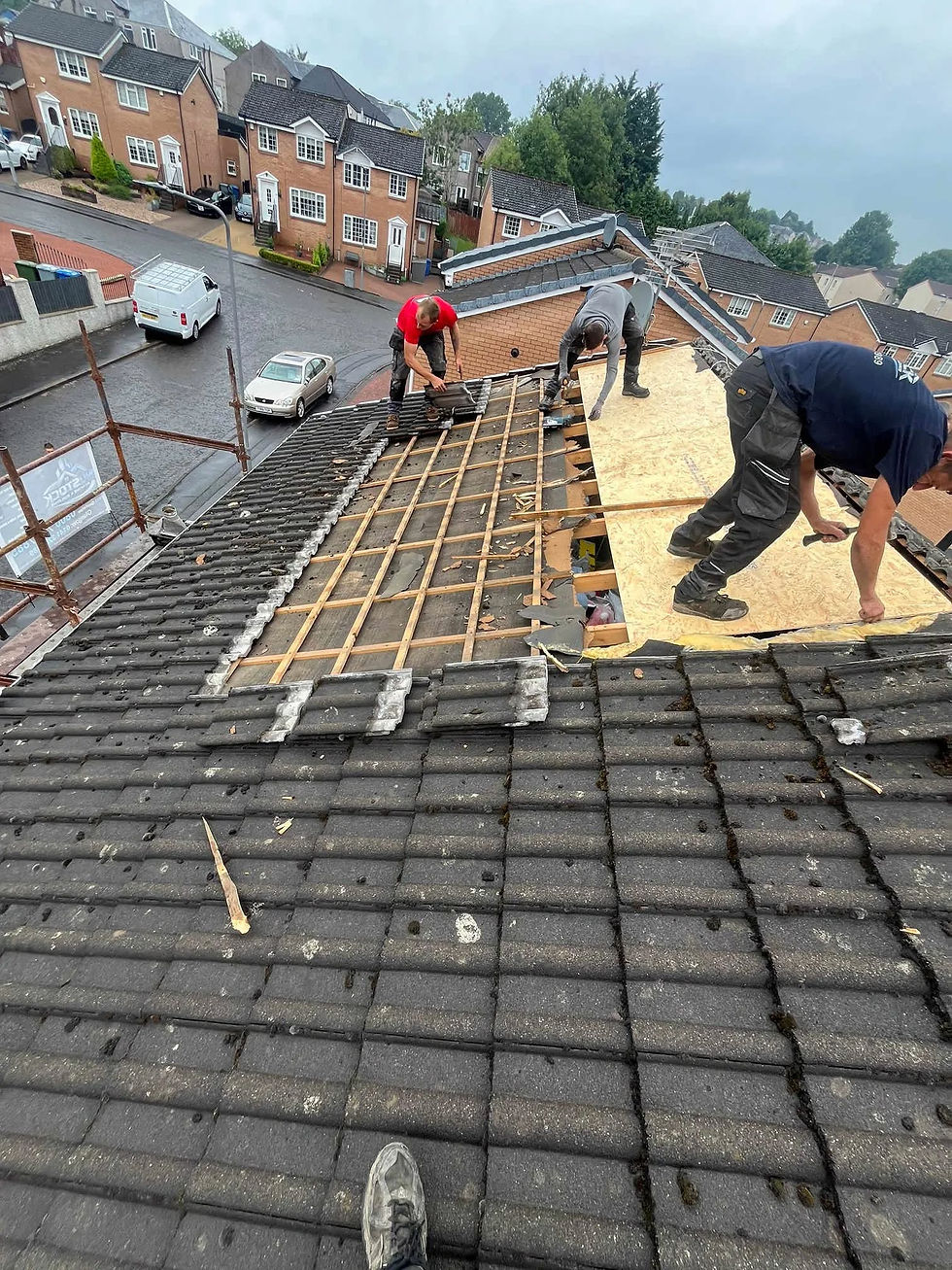
Secure loose, cracked and missing coverings
A single slipped slate or cracked tile can expose the underlay and battens below, but the visible gap does not always tell the whole story. We inspect the damaged unit, its fixing point and neighbouring coverings to see whether the fault is isolated. Failed clips, nails, battens or worn underlay may sit behind repeated movement. Replacement pieces should suit the existing size, profile, weight and appearance so they fit correctly with the surrounding roof. We carry out slate and tile repairs with attention to what holds each unit in place, not just the empty space it leaves behind.
Neighbouring fixings checked before we finish
We carefully remove broken material and avoid disturbing sound units where possible. The replacement is positioned and fixed using a method suited to the covering and roof detail. We then inspect nearby vulnerable points, including ridges and verges, for movement or damage that could lead to another leak. Widespread slipping may signal a broader fixing or batten issue, while a lone impact crack may need only a focused repair. We explain the difference after inspection, giving you a clearer view of the roof's condition and the scale of work that makes sense.

Frequently asked questions
Can you match an existing slate or roof tile?
We look for a replacement suited to the existing dimensions, profile, weight and appearance. Exact matches can depend on the covering, but correct fit and compatibility remain the main concerns.
Why do replacement slates keep slipping?
Repeated slipping can indicate failed fixings, damaged battens or movement in nearby units. We inspect the support and fixing points rather than simply putting the same slate back again.
Does one broken tile mean the underlay is damaged?
Not always. We inspect the exposed area and look for signs of water entry or deterioration below. A quick repair can still be important because the underlay should not remain exposed unnecessarily.