
Felt roofing matched to its condition
Layers checked together
We look beyond surface wear to assess the felt build-up and deck.
Junctions finished closely
We form laps, corners and wall details to resist driven rain.
Renewal kept proportionate
We compare repair, overlay and replacement before defining the work.

Layered protection for domestic flat roofs
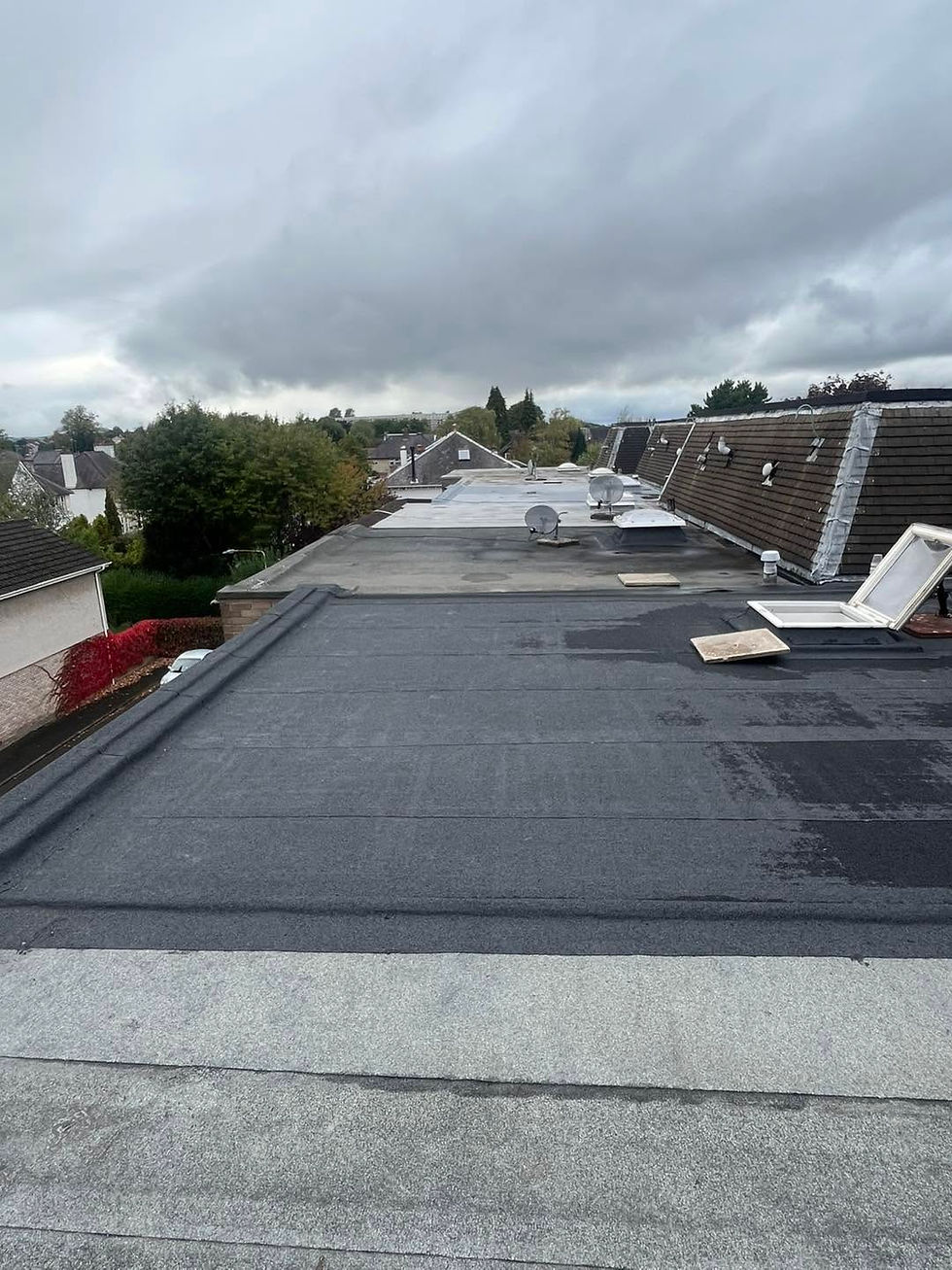
Modern felt roofing uses a built-up system rather than relying on one thin surface to keep out the weather. Its base, reinforcing, and finishing layers work together over a properly prepared deck. We inspect the existing felt for cracks, blisters, open joints, and worn areas, then check whether the problem reaches the layers or deck below. Corners, outlets, perimeters and wall abutments need particular care because water settles around poorly formed details. A felt roof replacement gives us the chance to correct failed layers instead of repeatedly sealing the symptom on top.
Repair, overlay or replace after inspection
A local repair may be practical where damage is limited and the surrounding felt remains bonded and serviceable. An overlay can suit some roofs when the existing build-up and deck are dry, stable and suitable to receive it. Full replacement becomes more sensible where leaks persist, joints are failing widely or the supporting surface needs repair. We remove defective material as agreed, prepare the deck and form the new layers with finished laps and edges. The recommendation follows what we uncover, not an automatic assumption that every blister needs the whole roof stripped.
Frequently asked questions
Can blistered felt be repaired without replacing the roof?
Sometimes. We need to check the blister's extent, surrounding bond and whether moisture has affected lower layers. A contained defect may be repairable, while widespread blistering can require broader renewal.
When is an overlay suitable for an old felt roof?
An overlay may be considered when the existing covering is stable, compatible and dry enough to support the new system. We also check the deck, drainage and roof details before recommending this route.
What causes felt joints to open?
Age, movement, poor bonding and weather exposure can affect laps and edge details. We inspect the joint and nearby surface to see whether resealing is sensible or the felt has deteriorated more widely.