
Fewer weak points on your flat roof
Stable base prepared
We deal with unsuitable deck areas before the membrane is fitted.
Joints kept purposeful
We reduce avoidable seams and seal necessary connections carefully.
Drainage points checked
We finish around outlets and confirm that water has a clear route away.

A continuous membrane over a stable deck
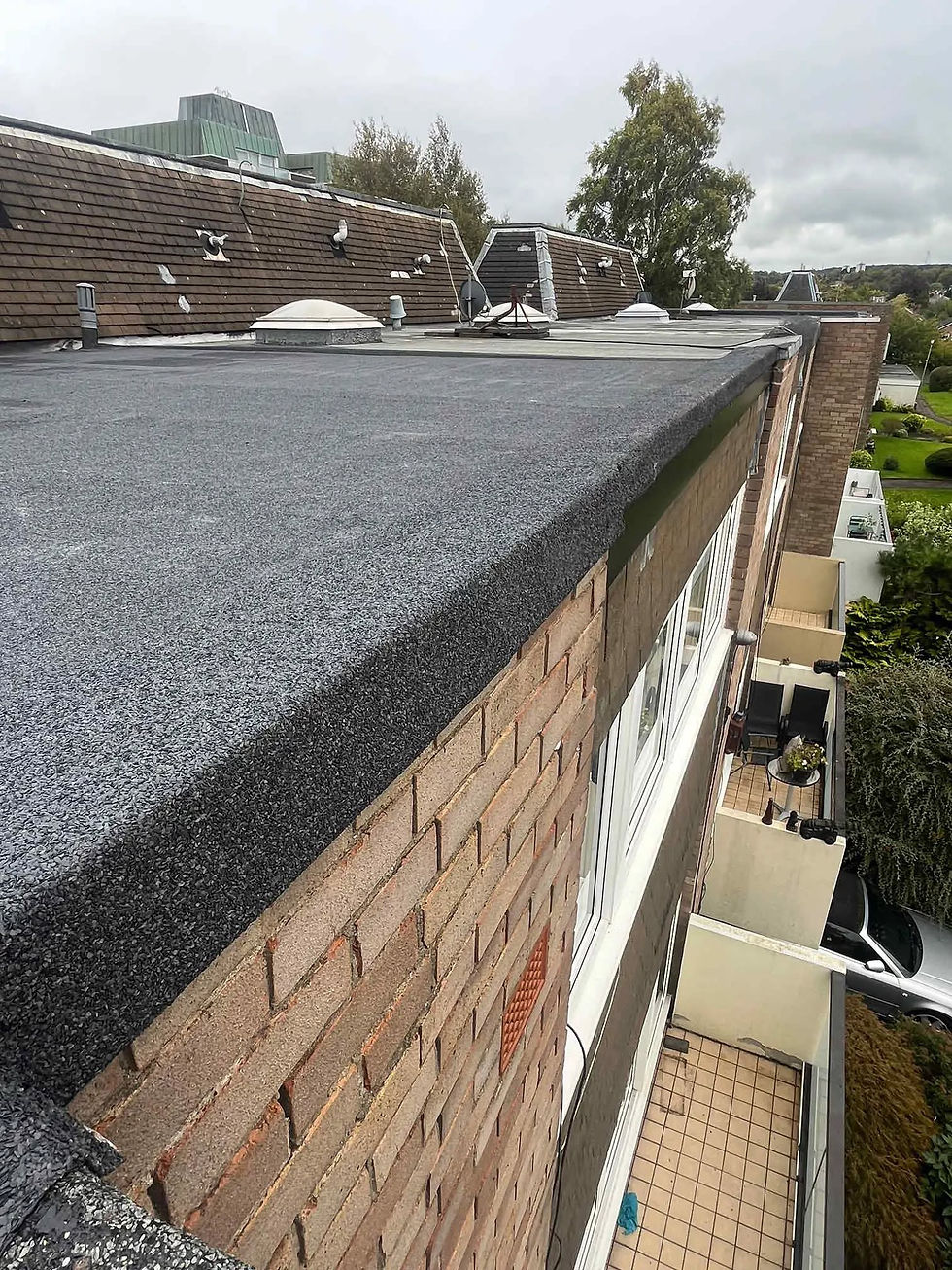
Rubber roofing creates a flexible weatherproof surface for suitable flat and low-slope domestic roofs. We begin by checking the deck, existing layers, drainage falls and roof dimensions. A membrane performs properly only when the base below is sound and stable, so weak or unsuitable material must be dealt with before it is covered. We lay the rubber across the prepared surface and form it around outlets, upstands and penetrations. Reducing unnecessary joints helps simplify the weatherproof layer, while careful perimeter details stop the roof edges becoming its weak point.
Preparation matters as much as the membrane
Every roof has its own layout. The number of corners, pipes and wall junctions affects how a rubber roof installation should be planned. We inspect the substrate and remove or renew unsuitable layers where required. Once the deck is ready, we fit the membrane, complete seams and edge details, and check outlets for a clear drainage route. Existing materials and access can also affect the method. We explain what must happen below the new surface because a smart sheet of rubber cannot persuade a poor deck to behave indefinitely.
Frequently asked questions
Can rubber roofing go over my existing flat roof?
It depends on the condition and compatibility of the existing layers. We inspect the surface and deck first. Unsuitable, wet or unstable material may need removal or renewal before a membrane is installed.
Is rubber suitable around pipes and roof upstands?
Rubber can be formed around penetrations and upstands when each junction is prepared and sealed correctly. We review the number and shape of these details because they affect installation planning.
Why does the deck need checking before installation?
The membrane follows and relies on the surface below it. Movement, decay or uneven areas can affect the finished covering, so we identify and address deck defects before laying the rubber.