
A pitched roof planned as a whole
Load and pitch considered
We match covering and fixing choices to the roof's shape and structure.
Ventilation included
We consider airflow within the roof build-up, not only the outer finish.
Edges fully completed
We finish ridges, hips and verges as part of the weatherproof system.

Every roof layer has a job to do
A pitched roof sheds rain through a complete system, not through tiles or slates alone. The structure supports the load, breathable underlay adds protection, and battens hold the selected covering in the required position. Ventilation helps manage moisture, while ridges, hips and verges close vulnerable edges and changes in direction. We assess pitch, shape, exposure and structural condition before planning a pitched roof installation. Covering weight and fixing requirements also matter. The right material must suit the building rather than simply looking agreeable from the pavement.
Replacement with the property kept protected
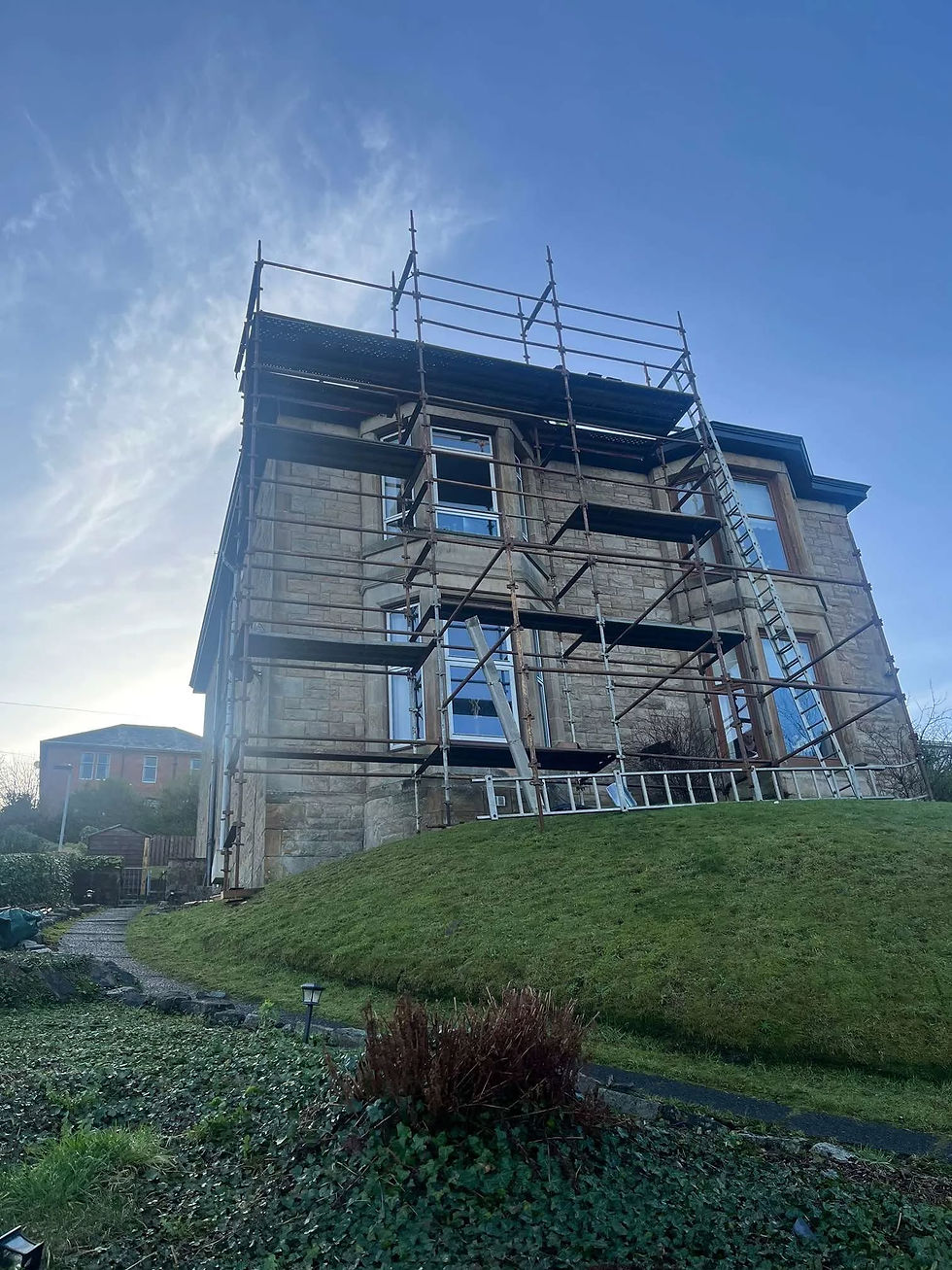
We arrange access and protect the working area before removing the old roof covering. With the surface stripped, we can inspect the structure and deal with agreed defects that were previously hidden. New underlay, battens and coverings are then fitted as required, followed by ridges, hips, verges and drainage connections. We plan temporary weather protection around the sequence because Glasgow rain is not known for checking our diary. Once installation is complete, we inspect the roof finish and the junctions where different materials and roof details meet.
Frequently asked questions
Can I change from one roof covering to another?
Possibly, but the alternative must suit the pitch, structure and expected exposure. Different coverings can have different weights and fixing needs, so we assess the roof before confirming a change.
How is the property protected during replacement?
We plan the stripping sequence, access and temporary weather protection before opening the roof. The exact method depends on roof size, shape and conditions, with exposed areas kept controlled.
Why does a pitched roof need ventilation?
Suitable ventilation helps moisture leave the roof space and can reduce condensation risk. We consider airflow alongside underlay and insulation arrangements when planning the new roof build-up.